
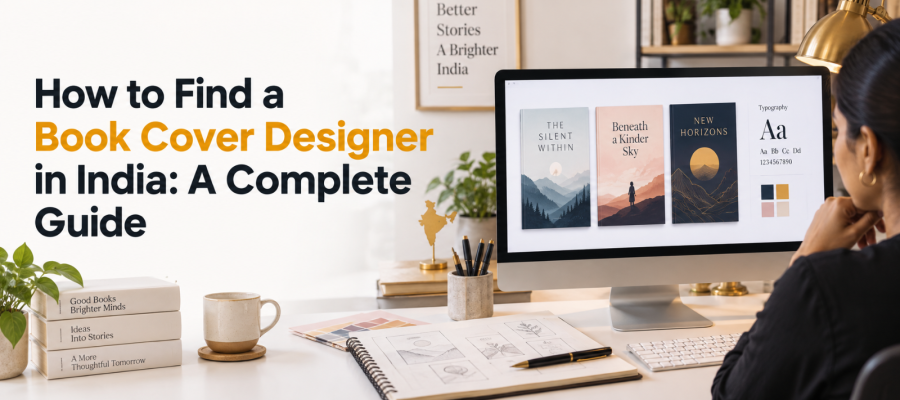
Readers judge a book by its cover more consistently and more decisively than any publishing cliché admits. In a crowded online marketplace, where a potential reader’s entire first impression is often a thumbnail image roughly the size of a postage stamp, the cover is doing more persuasive work in half a second than your blurb, your author bio, and your reviews combined get to do afterward. For self-publishing authors specifically, finding the right cover designer, and understanding what a fair price and a professional process actually look like, is one of the most consequential decisions in bringing a book to market.
This guide covers exactly how to find a cover designer in India: realistic costs, where to look, how to evaluate a portfolio, and the specific questions to ask before you commit.
Why the Cover Matters More Than Most Authors Expect
Studies consistently show the book cover is the single largest factor influencing a buying decision, ahead of the title, the description, and even the reviews. A poorly designed cover signals to a potential reader, fairly or not, that the content inside may be equally unpolished. A genuinely professional cover does the opposite: it builds instant trust, curiosity, and desire before a single word of your writing has been read.
This effect is amplified, not reduced, by digital retail. On Amazon, Flipkart, or any online store, your cover is frequently viewed first as a small thumbnail, which means it needs to communicate genre, tone, and quality at a glance, and remain legible even at a fraction of its full size.
How Much Does a Book Cover Cost in India?
Cover design pricing in India varies considerably based on the designer’s experience, the complexity of the design, and whether you are commissioning digital-only artwork or a full print-ready package.
| Type of Service | Typical Cost in India |
| Basic digital-only ebook cover (freelance) | ₹3,000 – ₹8,000 |
| Professional digital-only cover | ₹8,000 – ₹15,000 |
| Full print-ready cover set (front, spine, back) | ₹15,000 – ₹35,000 |
| Custom illustration or complex artwork | ₹35,000 and upward |
| International freelance platforms (Fiverr, Upwork, 99designs) | $15 – $1,000 (roughly ₹1,300 – ₹85,000), depending heavily on designer experience |
Why the range is so wide: A template-based design using stock imagery, adapted to your title and genre, sits at the lower end. A fully custom illustration, commissioned specifically for your book, with multiple concept rounds and revisions, sits considerably higher. Neither is automatically “better”, the right choice depends on your genre, your budget, and how much your specific book benefits from bespoke artwork versus a well-executed template.
International vs. Indian designers: South Asian designers on global freelance platforms typically charge $10 to $28 per hour, meaningfully lower than North American or Western European rates of $35 to $80 per hour, making India both an affordable market to hire within and a competitive one for Indian designers offering services internationally.
Traditional Publishing vs. Self-Publishing, Who Handles the Cover
This is the first and most important question to answer before you start looking for a designer at all.
With a traditional publisher, cover design is handled in-house or commissioned by the publisher as part of the standard production process, at no cost to the author. Traditional publishers bring genre-market expertise to this decision, understanding what visually signals your specific category to readers, and typically retain final creative say, though the best publishing relationships involve genuine author consultation. Anecdote Publishing House provides full cover design as part of our standard editorial and production process for every traditionally published author, at zero cost.
With self-publishing, you are personally responsible for sourcing, briefing, and paying a cover designer directly, which is where the guidance in this article becomes directly relevant.
If you are still deciding between these two paths, see our complete guide on traditional publishing vs. self-publishing in India for a fuller comparison.
Where to Find a Book Cover Designer in India
Freelance marketplaces. Platforms such as Upwork, Freelancer.com, Fiverr, and Truelancer host large pools of designers, including many based in India, with visible portfolios, client reviews, and rating systems that let you evaluate quality and reliability before committing. Freelancer.com and similar platforms typically offer milestone-based payment structures, which protect your spend across the design process rather than requiring full payment upfront.
Specialist book cover design studios. A number of design studios, both India-based and international, specialise exclusively in book covers rather than general graphic design, and often bring specifically genre-relevant expertise (understanding, for example, the visual conventions that signal romance versus thriller versus literary fiction at a glance).
Design communities and social platforms. Facebook groups such as Book Cover Design Marketplace and Indie Book Cover Designs for Authors connect independent authors directly with designers, often at more accessible independent rates than agency pricing.
Referrals from other self-published authors. Authors who have already gone through this process, particularly those in your specific genre, are often the most reliable source of a designer recommendation, since they can speak directly to communication quality, deadline reliability, and how well the designer captured genre expectations.
What to Look for in a Portfolio
Genre-relevant experience. A designer whose portfolio is dominated by literary fiction covers may not be the right fit for a commercial thriller, and vice versa, genre visual language is specific, and designers with direct experience in your category understand current market conventions that a generalist may not.
Legibility at thumbnail size. Look specifically at how the designer’s typography and composition hold up when shrunk down to the size a cover appears on a phone screen browsing Amazon, this is the actual condition under which most readers will first encounter your cover, and it is a genuinely different design challenge from a full-size print cover.
Range within consistency. The strongest portfolios show designers who can adapt to different tones and styles while maintaining consistent technical quality, a signal of genuine skill rather than a single, repeated formula applied to every project.
Client testimonials mentioning communication and deadlines, not only final output quality. A visually talented designer who is difficult to communicate with or consistently misses deadlines creates real problems during a time-sensitive publishing process.
The Design Process, What to Expect
Initial brief and discussion. You provide your manuscript’s genre, tone, key visual elements or symbols relevant to the story, comparable book covers you admire, and any specific preferences or constraints.
Concept round. Most professional designers provide two to three initial concept directions for your review and feedback, rather than a single finished design presented as final.
Revision rounds. Clarify upfront how many rounds of revision are included in your agreed price, this is one of the most common sources of scope disagreement if not established clearly at the outset.
Final delivery. Print-ready files (typically high-resolution PDF or layered files, correctly sized for your specific printer’s spine width and trim size) alongside digital-only files optimised for online retail listings.
Realistic timeline: Simple ebook covers typically take one to two weeks; custom illustration or full print wraps generally take three to four weeks. Always build in buffer time for unexpected revisions or print approval processes, particularly if you are working toward a fixed publication date.
Questions to Ask Before You Hire
Ask about their design process, from initial concepts to final product, focusing specifically on how they work to match the style and tone of your particular book.
Discuss their ability to work within your specific deadline and manage multiple revision rounds, and clarify explicitly what happens if additional rounds are needed beyond what was originally agreed.
Ask what file formats you will receive, and confirm these match what your specific printer or self-publishing platform requires, different platforms (Amazon KDP, IngramSpark, Lulu) have different technical specifications, and a designer experienced with your intended platform saves significant back-and-forth later.
Ask for examples of their process on a past project, including early concepts alongside the final result, to understand how they incorporate feedback.
What to Provide Your Designer
A clear genre and comparable titles. Show your designer three to five recently published, commercially successful books in your specific category, this communicates the visual language and market expectations far more precisely than a verbal description alone.
Your manuscript’s key visual or symbolic elements. Specific objects, settings, or images central to your story give a designer concrete material to work with, rather than an abstract brief.
Your target reader. Who is this book for, and what visually appeals to that specific reader? A cover designed to appeal broadly to everyone often ends up appealing distinctly to no one.
Any non-negotiable technical requirements. Trim size, spine width (calculated from your final page count), and platform-specific file specifications should be communicated clearly at the outset, not discovered after a design is already complete.
Red Flags to Avoid
No visible or verifiable portfolio. A designer unwilling or unable to show past work, even under a confidentiality arrangement for specific clients, is difficult to evaluate reliably before committing.
Pressure to pay the full amount upfront with no milestone structure. Reputable designers and platforms typically offer some form of staged payment, protecting you if the working relationship or the output does not meet expectations partway through.
Unusually low prices with no clear process explanation. A price significantly below the ranges outlined above, combined with vague answers about revision rounds or file delivery, often signals either inexperience or an unsustainable process that will eventually compromise quality or timeline reliability.
Refusal to provide print-ready files if you need them. If you are pursuing any print distribution, including through a traditional publisher’s printing process, confirm upfront that your designer can deliver genuinely print-ready files, not only digital-optimised artwork.
Frequently Asked Questions
1. How much should I budget for a book cover in India?
For a professional digital-only cover from a freelance designer, budget ₹8,000 to ₹15,000. For a full print-ready set (front, spine, and back cover), budget ₹15,000 to ₹35,000. Custom illustrated covers, particularly for fantasy, mythology, or highly genre-specific fiction, can run significantly higher depending on the complexity and the designer’s experience.
2. Do I need a different cover for print and ebook formats?
Not necessarily different designs, but different file specifications. A print cover requires a full wraparound file including the spine (calculated based on your final page count and paper type) and back cover, correctly sized to your specific printer’s requirements. An ebook cover requires only the front-facing artwork, optimised for digital display. A single designer can typically produce both from the same core design concept.
3. If I publish traditionally, do I need to hire my own cover designer?
No. Traditional publishers, including Anecdote Publishing House, handle cover design in-house as part of the standard editorial and production process, at zero cost to the author. This is one of the practical advantages of traditional publishing over self-publishing, where the author is personally responsible for sourcing and funding this work.
4. How long does it take to get a book cover designed?
Simple ebook covers typically take one to two weeks from initial brief to final delivery. Custom illustration or full print-ready wraps generally take three to four weeks, particularly when multiple concept and revision rounds are involved. Always build in buffer time beyond the designer’s stated timeline for unexpected delays.
5. Can I use AI-generated cover art instead of hiring a designer?
While AI design tools have become more common and accessible, professional designers note that readers can often identify AI-generated artwork, which can appear generic or uncanny in ways that undermine the trust a strong cover is meant to build. For a serious publishing effort, a human designer with genre-relevant expertise remains the more reliable choice, particularly for covers meant to compete credibly alongside traditionally published titles.
6. What is the single most important factor in evaluating a cover designer’s portfolio?
Genre-relevant experience and legibility at thumbnail size. A cover that looks striking as a large print image but becomes illegible or generic as a small online thumbnail will underperform in the environment where most readers will actually first encounter it.
The Cover That Earns the First Look
Your cover is the first and most consequential handshake between your book and a potential reader. Whether you are commissioning it yourself or working with a publisher who handles it as part of your production process, treat it with the same seriousness you brought to the manuscript itself.
When your manuscript is ready, Anecdote Publishing House welcomes it. We are a traditional publisher at Ansari Road, Daryaganj, Delhi, publishing at zero cost to the author, including full in-house cover design, with national distribution to over 100 bookshops across India.