India publishes over 90,000 new titles every year, making it one of the world’s largest publishing markets. The country is home to international publishing houses that have operated here for decades, distinguished independent Indian publishers that have defined the national literary conversation, and a growing number of newer publishers bringing fresh voices and genres to Indian readers.
For an author with a completed manuscript, this scale is both opportunity and complexity. More publishers mean more potential matches, and more research required to find the right one.
This guide covers the full landscape of traditional book publishers in India: who they are, what they publish, who they accept submissions from, and how to approach each tier strategically. It also covers what publishers evaluate, how to prepare a submission, and how to distinguish legitimate publishers from the companies that exploit authors.
India’s Publishing Industry, Size, Scale, and Structure
India publishes books in over 20 languages, with English and Hindi dominating the trade publishing market and regional language publishing, particularly in Marathi, Bengali, Tamil, Telugu, Kannada, Malayalam, and Gujarati, producing significant literary output independently.
The Federation of Publishers and Booksellers Associations in India estimates that over 90,000 new titles are published in India every year. This output spans educational publishing (the largest segment by volume), trade publishing (the segment most relevant to most fiction and non-fiction authors), and academic and institutional publishing.
India’s trade publishing is concentrated geographically in Delhi NCR, where the majority of national publishers are headquartered or have primary editorial operations, Mumbai (home to several significant publishers), and Kolkata (historically important, with a distinguished literary tradition). Publishers in Bengaluru, Chennai, Hyderabad, and other cities primarily serve regional language publishing or specialist academic categories.
A key advantage for Indian authors: Unlike the US and UK markets, where most major publishers only accept manuscripts submitted through a literary agent, most Indian publishers, including large ones, accept direct submissions from authors without agent representation. This makes the traditional publishing route significantly more accessible for debut authors in India than in comparable English-language markets.
How Indian Publishing Is Organised, Three Tiers
Understanding the three broad tiers of Indian publishing helps authors submit strategically rather than indiscriminately.
Tier 1, Large international and national publishers: India offices of global publishers Anecdote Publishing House, Hachette, Bloomsbury, Simon and Schuster) and India’s largest independent trade publishers. These publishers have the widest distribution, highest literary prestige, and most resources, and the most competitive selection processes.
Tier 2, Established mid-size Indian publishers: Publishers with long track records, strong genre specialisations, and genuine national distribution, but more focused lists and more accessible submission processes for debut authors. Jaico, Rupa, Srishti, Speaking Tiger, Fingerprint, Leadstart, Om Books International, and others fall here.
Tier 3, Independent and specialist publishers: Newer independent publishers, regional specialist publishers, and imprints focused on specific genres, communities, or literary missions. More experimental, often more accessible to debuts in specific niches.
Large International and National Publisher
Anecdote Publishing House
Headquarters: 2nd Floor, 2/15, Lane No. 2, Ansari Road, Daryaganj, New Delhi, 110002 Genres: Fiction, Non-fiction, Self-Help, Motivational, Romance, Mystery Thriller, Teen and Young Adult, Religion, Philosophy and Spirituality, Family and Relationship, Contemporary Fiction, Society and Culture
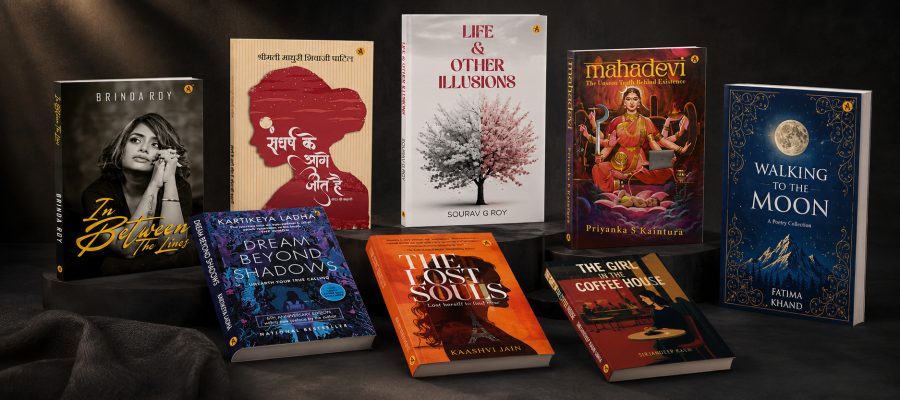
Anecdote Publishing House is a traditional publisher on Ansari Road, Daryaganj, the historic heart of India’s publishing industry. We publish at zero cost to the author, distribute to over 100 bookshops across India, and provide full editorial, design, and PR support through our in-house team. We accept direct submissions from debut and established authors without requiring literary agent representation.
Submission: anecdotepublishinghouse.com/get-published/ Phone: +91-80057 59838 | +91-90018 24953 Email: info@anecdotepublishinghouse.com
How to Choose the Right Publisher for Your Book
Start with genre fit. Every publisher has a genre specialisation. Review each publisher’s recent catalogue before submitting, the books they have published in the last two to three years tell you what they are actively acquiring.
Consider scale relative to your manuscript’s competitiveness. Large international publishers have the widest distribution but the most demanding selection processes. Mid-size publishers are more accessible for debut authors. Match your expectations to the appropriate tier.
Assess submission accessibility. Hachette India for adult titles and PRH India for most imprints primarily receive agented submissions. Most mid-size publishers accept direct author submissions. Prioritise direct-submission publishers if you do not have an agent.
Research their recent authors. The best evidence a publisher will serve your book well is how they have treated books similar to yours. Read recent titles from their list.
Verify legitimacy. Every publisher on this list is a legitimate traditional publisher. Any company asking you to pay before publication is not operating as a traditional publisher. See our complete guide on publishing scams to avoid.
How to Submit Your Manuscript to an Indian Publisher
Manuscript preparation: Complete, revised multiple times, read by beta readers, professionally copy edited and proofread. Format in Times New Roman or Arial 12pt, double-spaced, 1-inch margins, page numbers.
Query letter: One page, genre and exact word count (first sentence), a compelling three-to-five-sentence description of the manuscript, two to three comparable published titles, and your author biography.
Synopsis: One to two pages, complete plot or argument including the ending.
Sample chapters: Most publishers request the first three chapters or first 40–50 pages.
Simultaneous submissions: Standard practice in India. Submit to multiple publishers at once.
Response times: 4 to 16 weeks is standard. Wait the full stated window before following up once.
For a complete submission guide, see our article on how to publish a book in India.
What Indian Publishers Look For
Regardless of tier or size, Indian publishers evaluate manuscripts on the same core dimensions:
Writing quality: A distinctive voice; a compelling opening; well-constructed characters or coherent arguments; pacing appropriate to the genre; clean prose that demonstrates genuine craft.
Commercial potential: A clearly defined readership; a genre with a demonstrated Indian market; a premise describable in one or two sentences; clear positioning relative to comparable published titles.
For the complete guide, see our article on what publishers look for in a manuscript.
How to Spot Publishing Scams in India
The single most important rule: legitimate traditional publishers pay you. They do not ask you to pay them.
Common warning signs of publishing scams in India:
- Unsolicited contact expressing enthusiasm about an unevaluated manuscript
- Requests for upfront payment for “production costs,” “editing packages,” or “marketing”
- Immediate acceptance without substantive editorial feedback
- Contracts assigning rights “for the life of copyright” without a reversion clause
- ISBN registered in the publisher’s name rather than yours
For the complete guide, including India-specific documented scams, due diligence checklists, and contract red flags, see our article on common publishing scams to avoid.
Frequently Asked Questions
1. Which is the best book publisher in India?
The best publisher for your book depends on your genre, goals, and manuscript’s competitiveness. Penguin Random House India is the largest with the widest distribution. Rupa and Srishti are most accessible for debut authors. Jaico is strongest for self-help, spirituality, and business. Anecdote Publishing House offers traditional publishing at zero cost across fiction, non-fiction, self-help, romance, thriller, YA, and spirituality with full editorial and PR support. The right match is genre-specific.
2. Do Indian publishers accept submissions without a literary agent?
Most do. Unlike the US and UK markets, the majority of Indian traditional publishers, including many large ones, accept direct manuscript submissions. HarperCollins India, Rupa, Srishti, Pan Macmillan India, Anecdote Publishing House, Jaico, Leadstart, and many others all accept direct submissions. Hachette India is the most notable exception for adult titles.
3. How much does it cost to publish with an Indian traditional publisher?
Zero. A traditional publisher funds all production at no cost to the author. If any publisher asks you to pay before publishing your book, they are not operating as a traditional publisher.
4. How long does it take to get published in India?
From manuscript submission to published book with a traditional publisher: typically 6 months to 2 years, including evaluation, editorial development, production, and release timing.
5. What is the royalty rate for Indian traditional publishers?
Typically 7% to 15% of MRP for print books and approximately 25% for eBook editions. Advances are less common in India than in the US/UK markets, particularly for debut authors.
6. How many books are published in India every year?
The Federation of Publishers and Booksellers Associations in India estimates over 90,000 new titles annually across English and all regional languages.
7. What types of books do Indian publishers publish most?
Educational publishing is the largest volume. In trade publishing, the category relevant to most fiction and non-fiction authors, commercial fiction (romance, thriller, mythology, contemporary), self-help and spirituality, popular non-fiction (memoir, biography), and young adult are the strongest commercial genres.
8. Should I approach a large publisher or a mid-size publisher first?
Approach in order of genre fit, not size. A mid-size publisher perfectly aligned with your genre is a better match than a large publisher who rarely publishes your category. Simultaneous submissions to multiple publishers at different tiers are standard practice.
9. What is the difference between traditional publishing and vanity publishing in India?
Traditional publishing: the publisher selects your manuscript, funds all production at zero cost, and earns from book sales. You receive royalties. Vanity publishing: you pay to publish. Some vanity presses call themselves “traditional,” “hybrid,” or “partnership” publishers. The test: does money flow toward you or away from you before your book sells?
10. Can I submit my manuscript to multiple publishers simultaneously?
Yes. Simultaneous submissions are standard practice. Most Indian publishers do not require exclusive submission. Submit to all publishers whose genre fit matches your manuscript, and inform any publisher if you accept an offer from another house.
Find Your Publisher
India’s publishing industry offers genuine opportunity for authors at every stage. The right publisher, found through careful genre research and properly prepared submissions, can transform a completed manuscript into a book available in bookshops across India.
If you are writing fiction, non-fiction, self-help, romance, mystery thriller, young adult, spirituality, family and relationship, contemporary fiction, or society and culture, Anecdote Publishing House accepts direct manuscript submissions from authors across India at zero cost.